After the Riviera Nayarit piece a few weeks ago, a few of you wrote in asking what else moves through this network and what categories beyond "luxury beachfront second home" actually show up. This post is the answer.
Today's surface is a very different category: a smaller-ticket investment unit in Genting Highlands, Malaysia, designed for rental yield rather than personal use. Entry pricing has historically been positioned in the low-to-mid six-figure USD range, a fraction of the Mexico property. Different audience, different math, different risk profile. I want to write about it honestly because the gap between "headline pitch" and "what you should actually evaluate" is wider here than in any post I've put up before.
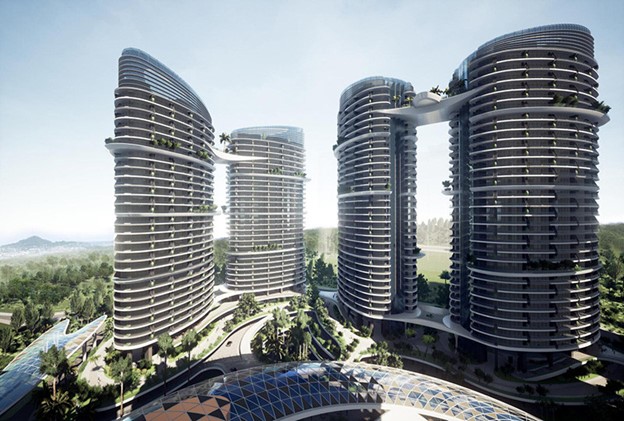
The Project: IBN Highlands City
The development is IBN Highlands City, a multi-tower mixed-use project in Genting Highlands, the mountain resort area in Pahang state, about an hour by car from Kuala Lumpur. The location is intentional: Genting Highlands is anchored by Resorts World Genting, a massive integrated hotel-casino complex that draws an unusually large volume of regional tourism. The pitch behind a project like this is simple: sit next to mature, proven foot traffic and let it spill over into rental demand for newer units.
The building is structured as branded hotel-apartments (Gloria Hotels & Resorts) plus premium residences, with both phases sharing common amenities. Phase 1 construction has been underway for some time; specific completion status, pricing, and inventory all need to be verified with the developer's sales team directly before any decision. The marketing materials in my hands are dated and the market moves.
The unit type being marketed to my network:
- Hotel-apartment style unit suitable for short-term rental operation
- Entry price positioned in the low-to-mid six-figure USD range (verify current pricing at the time of inquiry)
- Located in Genting Highlands, a short drive from Resorts World Genting and its anchor traffic
- Branded amenities: infinity-edge sky pool, sky garden tiers, balconies in every unit, on-site convention space
For a sense of the location and surrounding context, the embed below shows the project pinned in Genting Highlands. The surrounding labeled landmarks (Resorts World Genting, the anchor casino/hotel complex; Awana Skyway, Chin Swee Caves Temple, the Theme Park, and the Genting Highlands Premium Outlets) all sit within a short drive of the project, which is the underlying thesis behind the rental-yield pitch.
Direct link to the project's full Google Maps listing: IBN Highlands City.
The Headline Claim, and How to Read It
The marketing material from the developer prominently features a "7% Guaranteed Rental Return" offer. I want to be precise about what that is and isn't.
It's a developer-issued rental guarantee: a contractual promise from the developer (or its appointed operator) to pay the unit owner a fixed yield for a defined period, typically 2–5 years post-handover, regardless of whether the unit actually rents at that rate. This is a real and common structure in branded-residence pre-sales across Southeast Asia and the Gulf. It's also a structure where the details matter enormously: who is contractually obligated to pay, what backs the obligation, what happens in years 6 and beyond, how does the guarantee interact with your actual occupancy if you want to use the unit yourself.
A 7% guaranteed return looks great on a flyer. The actual evaluation question is: how confident are you that the entity issuing the guarantee will still be operating, solvent, and honoring the contract in year 4? That's not a question I can answer for you in a blog post, and it's the question that matters most. (For comparison: many Southeast Asia pre-construction projects in the last decade have offered similar guaranteed returns; the ones where buyers fared well had financially strong operators behind the guarantee, and the ones where buyers got hurt didn't.)
I'm flagging this prominently because "guaranteed" is a word that gets misread. It does not mean risk-free.
Why This Type of Opportunity Reaches My Network
In the Mexico post I described the international agent network I maintain, agents and developers I keep in touch with across Mexico, the Caribbean, Central America, and select European markets, and how genuinely interesting opportunities move through agent networks before they reach US-facing sites.
This Malaysia opportunity is a slightly different surface: I'm offering it in partnership with Ed Laine, my mentor at eXp Realty, a broker with 35+ years in Washington State real estate, over $1 billion in homes sold, and a wider international network than mine. The developer relationship sits with Ed; he's the one connected to the US-side sales operation. On opportunities where Ed has the deeper relationship and I have the client trust on the Eastside, we work together so my clients get the benefit of both: my buyer representation and his vetted international connections.
That's a different sourcing chain than the Mexico property, where I worked directly with the listing agent's team. I want to be transparent about which is which.
I Have Not Personally Visited This Project
This matters and I want to flag it clearly:
I have not been to Genting Highlands. I have not toured this development in person. I have not walked the construction site or stayed in a comparable unit in the area.
For the Mexico property I described my practice of traveling to vet projects firsthand: staying at branded residences, walking units, meeting developers. That practice applies to projects in markets I cover directly. For this Malaysian project, what I have is: the developer's marketing materials, Ed Laine's vetting of the relationship, and publicly available information about Genting Highlands and the broader Malaysian residential property market for foreign buyers. That's a meaningfully shallower diligence layer than I'd apply to a property I was personally putting a client into without further work.
If a reader gets seriously interested, the next step on my side would be either (a) personally traveling to inspect, or (b) connecting you to people on the ground in Malaysia who can do diligence we both trust. Pre-construction commitments are not the kind of thing I'd advise anyone to make on the strength of a flyer and a Zoom call, for either side of the table.

What This Actually Is (and Isn't)
This is: A pre-construction branded hotel-apartment investment in a Southeast Asia tourism market. The entry price is small relative to US Eastside real estate. The pitch is yield, not appreciation, and not personal use. The developer is offering a multi-year rental guarantee to make the yield concrete.
This isn't: A Mexico-style second-home. You're not going to fly to Kuala Lumpur for a long weekend the way an Eastside buyer might fly to Puerto Vallarta. The unit is sized and located for rental operation, not for the kind of multi-week personal use a vacation home implies.
Who this could fit:
- An investor explicitly building a yield-oriented international real estate portfolio (think: someone who already has comparable holdings in other countries)
- Someone who has done diligence on Malaysian foreign-ownership rules and is comfortable with the fideicomiso-equivalent process there (Malaysia uses minimum-price thresholds for foreign buyers; the property would need to qualify)
- An investor who can afford to lose the position entirely if the development doesn't deliver, which is the bar I'd hold any pre-construction commitment against
Who this is NOT for:
- Anyone treating "7% guaranteed" as risk-free
- Anyone whose first international real estate purchase this would be. Pre-construction in a foreign market is not where to learn
- Anyone whose due-diligence comfort requires being on the ground themselves and who can't or won't actually travel to Malaysia before committing
- Anyone looking for personal-use lifestyle property
Some Honest Numbers Context
The marketing piece quotes macro figures about Malaysia's foreign direct investment inflows (consistently among the top ASEAN destinations in recent years) and Genting Highlands' very large annual visitor base anchored by Resorts World Genting. Those macro signals are real and they support the underlying thesis that Genting Highlands is a viable tourism market. They don't tell you anything specific about this developer's execution risk, this building's construction timeline, or whether your specific unit will hit the guaranteed return after construction completes. Verify the current figures. The marketing material I'm working from is a few years old.
The questions worth asking before any pre-construction commitment in any country, in rough order:
- Who legally owes you the guaranteed return: the developer, a separate management company, a hotel brand operator? What's their balance sheet?
- What happens if construction slips 12 months? (Many pre-construction projects do.)
- What's the actual track record of the developer on prior projects: delivered on time, met spec, honored post-completion obligations?
- What's the exit path: if you want to sell in year 3, what's the secondary market? In branded pre-sale units, often there's a more limited resale market than for unbranded properties.
- What are the local tax implications for a US person holding Malaysian property and receiving Malaysian-sourced rental income? (Real, not minor.)
None of these are reasons not to invest. They are the diligence list before you do.
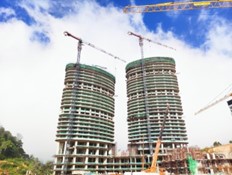
Phase 1 towers under construction (developer-supplied progress photo). The marketing renderings above show the finished design vision; this is the project being physically built. Construction status changes; verify current build progress with the developer's sales team before any decision.
What Subscribing to Updates Actually Gets You
I'm going to keep doing what I did in the Mexico post: when something genuinely interesting moves through this network, I write it up with the same honest "who this fits / who this doesn't" framing. Sometimes it's Mexico. Sometimes it's something like this Malaysia project. Sometimes it'll be Europe, the Caribbean, or domestic opportunities most buyers don't see.
If that kind of curated, honestly-framed deal flow is useful to you, subscribe to my list. Low volume. I won't send unless there's signal.
If You're Specifically Interested in This Project
If you want to look at IBN Highlands City seriously, the path forward is:
- Reach out via the contact page. I'll set up an introductory Zoom with the US-side sales team that Ed Laine is connected with. I'll be on the call.
- Get the diligence package: full developer financials, construction-status update, current pricing and inventory, the actual contractual language of the rental guarantee.
- Decide whether to commission independent diligence before any commitment, likely either an in-person inspection (mine or someone we trust) plus Malaysian legal counsel reviewing the developer contract.
For most readers, the right action probably isn't "buy this unit." It's "stay subscribed and see what comes next." That's an honest framing, and I'd rather lose a deal than misrepresent the diligence floor on pre-construction in a foreign market.
Chandru Swaminathan is a licensed real estate broker with eXp Realty in Washington State, serving the Greater Seattle Region. The IBN Highlands City opportunity is offered in partnership with Ed Laine, Chandru's mentor at eXp Realty, whose developer relationship anchors the introduction. Chandru has not personally visited this property. The "7% guaranteed rental return" referenced above is a developer-issued contractual offer, not a market projection; its value depends on the issuer's financial strength and the specific terms, which prospective buyers should review with qualified Malaysian counsel. This post is informational only and does not constitute legal, tax, financial, or investment advice. Cross-border pre-construction real estate has substantial risks (execution, currency, regulatory, and exit-liquidity) that require qualified local counsel.
Opinions expressed are those of the author and do not necessarily reflect the views of eXp Realty.